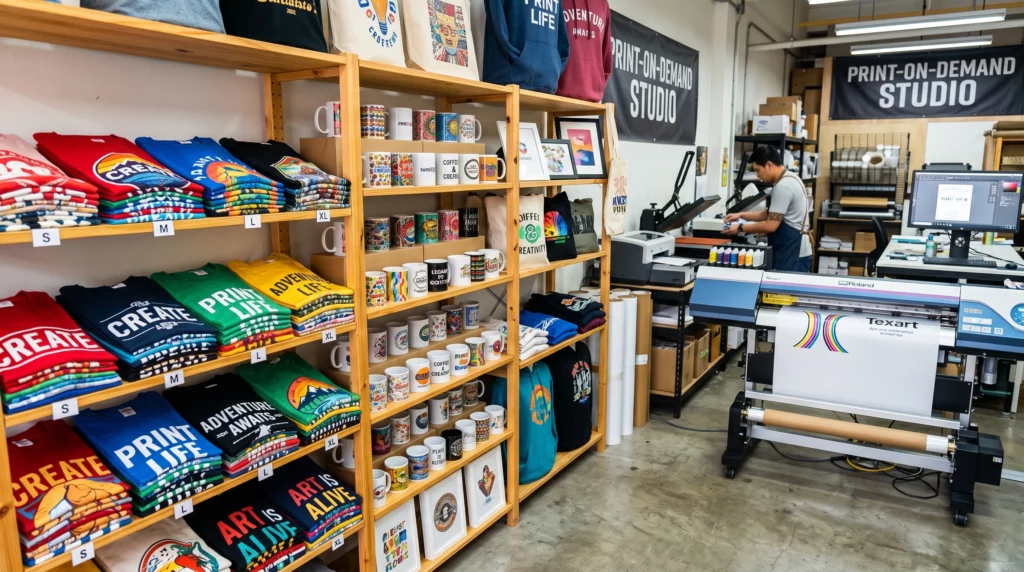
Print on demand, often called POD, fits smoothly into today’s age of online entrepreneurship. By using POD, you can design and sell custom products like tshirts, mugs, posters, and phone cases without having to stock large quantities upfront. Instead, when a customer places an order, the product is printed and shipped straight to them by your print on demand partner. This setup frees you from the packing, shipping, and inventory worries common with traditional ecommerce.
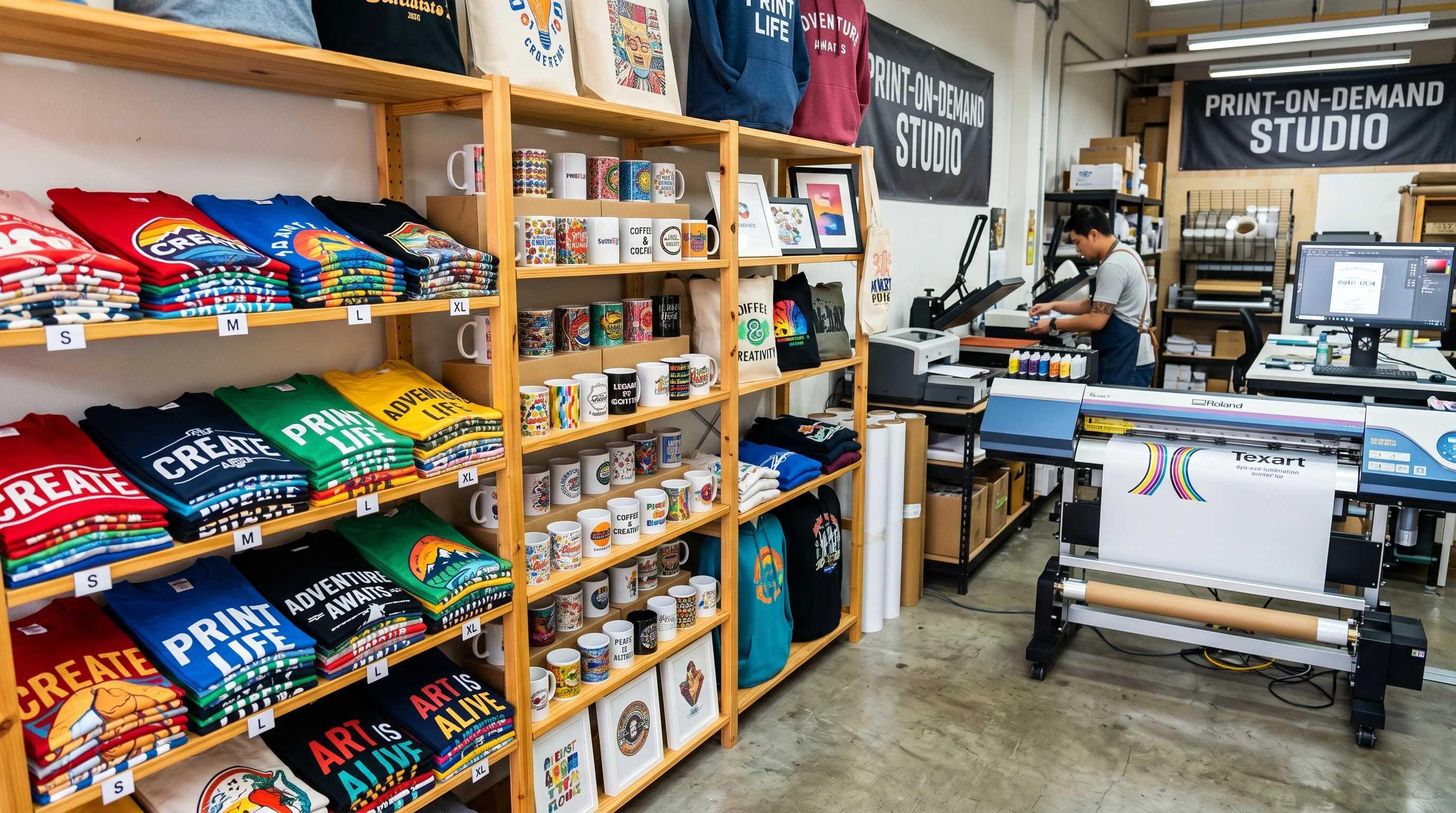
What is Print on Demand?
Print on demand is a way to create and sell custom products online without ever having to stock or ship anything yourself. You design, upload it to a print on demand platform, and list it in your online store. When a customer makes a purchase, your POD partner handles the entire process, from printing to shipping. This means you only pay for each item as it sells. This makes it a low risk option for beginners and for anyone looking to explore their ideas before committing big money.
This method is great for creators, artists, and entrepreneurs who want to focus mainly on brand building and marketing, without getting lost in logistics. You can offer all sorts of products with your own designs: shirts, home decor, accessories, stationary, and more. Successful POD sellers often build niche stores around unique themes, personal brands, or clever slogans. By doing this, you can carve out your unique slice of the huge ecommerce market.
Why Print on Demand is Worth Considering
One major reason people jump into print on demand is its easy entry. There’s no need to shell out cash for inventory or rent warehouse space. All you really need is a creative idea, some graphic design know how (or access to freelance designers), and basic skills for running an online store. Plus, you avoid worrying about excess products lying around or guessing what trends will catch on. Your print partner only produces each item when it sells, so you’re never stuck holding surplus stock.
POD is also flexible, making it easy to test new concepts. If something doesn’t work, you can switch up designs or styles quickly and cost effectively. For side hustlers and adventurous creators, this practicality makes starting your own brand or extra income stream more approachable than ever.
Step by Step Guide: How to Start a Print on Demand Business
Setting up a print on demand business is pretty straightforward, but getting it right really makes all the difference. Here’s a basic guide to help you kick things off:
- Pick a Niche or Theme: Focus on a specific audience or type of item. Examples include targeting pet lovers, bookworms, or sports fans. When your store reflects your personal interests, authenticity shines through and buyers can tell.
- Create Unique Designs: Don’t worry if you’re not a pro designer. Tools such as Canva, Adobe Express, or Procreate make things easier. You can also commission affordable freelancers from sites like Fiverr or Upwork for custom artwork. Be original—never copy or use copyrighted material.
- Choose a Print on Demand Platform: Big names include Printful, Printify, SPOD, Teespring, Gooten, and Redbubble. Some work with Shopify or WooCommerce, while others offer their own online marketplaces. Review their product variety, print quality, integration options, and shipping locations before you decide.
- Set Up Your Online Store: Most POD services integrate easily with platforms like Shopify, Etsy, or WooCommerce. Redbubble and Teepublic include their own built in audiences too. Organize your product pages, write clear descriptions, and upload sharp mockups to get attention from shoppers.
- Connect and Sync Your POD Partner: Integrating your POD service automates fulfillment. Each sale triggers production and shipping, so you can focus on growing your business instead of packing boxes.
- Launch Your Store and Start Marketing: Spread the word using Instagram, TikTok, Pinterest, or Facebook. Grow an email list, team up with influencers, and consider running ads to boost your reach. Stay active and consistent—regular marketing makes a difference.
Print on Demand: Key Terms and Concepts for Beginners
- Mockups: Digital images that show your design on real products like shirts or mugs. Most POD platforms provide easy to use mockup generators for product previews.
- White Label: Products without third party branding, letting your brand shine as the only one customers see. This is important for anyone building brand recognition.
- Product Base Cost: What your POD partner charges for producing each item. This cost doesn’t include your profit.
- Profit Margin: The portion you keep between your selling price and production costs. Higher profit margins mean better earnings.
- Order Fulfillment: The entire process from sale through printing and shipping, all handled by your POD partner so you can focus on growth.
Challenges and Things to Keep in Mind
POD can sound easy, but don’t forget these important points as you’re getting started:
- Product Quality: Print quality and comfort can vary. Order samples before going live to be certain your products meet your standards.
- Shipping Times: Delivery speeds depend on where your print partner’s facilities are based. International shipments may take longer, so communicate expected timelines clearly.
- Customer Support: Your partner handles the backend work, but you may not fully control service speed. Stay upfront and transparent when talking with customers to keep them happy.
- Design Quantity: Avoid flooding your store with too many random graphics. Focus on a niche, and maintain a consistent look for a smoother shopping experience.
- Copyright Issues: Don’t use trademarked logos, brand names, or copyrighted images. This can cause legal and financial troubles. Stick to designs that are fully your own or licensed for use.
Product Quality and Samples
Ordering samples is a must. You’ll see your designs in real life and evaluate print clarity and product comfort. Real product photos for your store or social media boost buyer trust and can increase conversions.
Shipping and Fulfillment Delays
Prolonged shipping frustrates customers. Look into your POD partner’s shipping policies and production times at the start. Some have production in various regions; others ship from one place. Clearly post estimated delivery times to reduce customer service headaches down the line.
Advanced POD Tips for Standing Out
Once your store is established, these extra strategies can help you get noticed and ramp up sales:
- Limited Edition Drops: Drop unique collections or products for a short time to create buzz and demand.
- Personalization: Many POD partners allow customers to add names or personal messages to products, which is perfect for gifts.
- Influencer Partnerships: Work with influencers so they feature your products, providing social proof and driving more sales.
- Contests and Giveaways: Run social media contests or offer special discounts to increase engagement and attract new buyers.
- Seasonal Collections: Launch product lines for holidays and special events—like Valentine mugs or Halloween shirts—for timely sales boosts.
Popular Print on Demand Product Ideas
POD shines because of its range of options. Here are some options when you’re picking products to list first:
- Classic tshirts and sweatshirts
- Hats and beanies
- Tote bags and backpacks
- Phone cases
- Mugs and water bottles
- Pillows, blankets, and home decor
- Wall art, posters, or stickers
- Notebooks and journals
Testing a selection will help you figure out what your shoppers are into. Start with a few products, see what gets traction, then expand your lineup based on real feedback.
Frequently Asked Questions
Getting started with POD brings up plenty of questions. Here are some answers to what’s asked the most:
How much does it cost to start a print on demand business?
You can launch your POD business for very little upfront since you aren’t prepaying for inventory. Some platforms charge a monthly fee; others take a percentage of each sale. Your main expenses will be design tools, your shop setup, and marketing costs.
Do I need to be a graphic designer?
No! Even if you don’t create art yourself, there are easy tools and affordable freelancers ready to help build unique designs for your products.
Can I run a POD business from anywhere?
Absolutely. As long as you have access to the internet, location doesn’t matter. Your POD partner handles production, so you’re free to work wherever you choose.
Which is the best POD platform?
Different platforms suit different needs. Printful, Printify, and Redbubble are some of the top picks. Base your choice on available products, integration options, print quality, and your specific target audience.
Final Thoughts
POD gives upcoming entrepreneurs a low risk way to start an online business, get creative, and reach worldwide customers without the hassles of shipping and storage. Smart niche selection, eye catching designs, and simple marketing are all it takes to grow your brand and earn real income, all with very little up front.
This isn’t a get rich quick path, but it’s creative, scalable, and flexible, letting you try ideas and see what sells before investing big. If you have a design idea or a brand you want to put out there, print on demand is definitely worth checking out.